As the Japanese girls have the Hina Matsuri on March 3rd, the Japanese boys have their own festival, Tango no sekku 「端午の節句」, on May 5th, which was designated as a National holiday, Kodomo no hi 「こどもの日」 (Children’s Day), in 1948.
A TV recording from the Kodomo no hi festival, at Senso-ji:
The origins of this festival are unknown, but historians trace it to an ancient rural Chinese custom, which involved ceremonial helmets, bows and arrows. The custom became popular in Japan at the beginning of the 7th century.
Another version is that the festival started with some farming customs taking place in May, when the insects start harming the crops. The farmers where trying to “frighten” the insects with bright banners and grotesque figures. Later, these figures begun to represent warriors.
Yet another legend traces the origins of the Tango no sekku to the Tokimune Hojo’s victory over the invading Mongols on May 5th 1281, when the Mongolian fleet was destroyed by a great typhoon, the famous kamikaze. As a result, the Samurai families erected flags and streamers in celebration of victory.
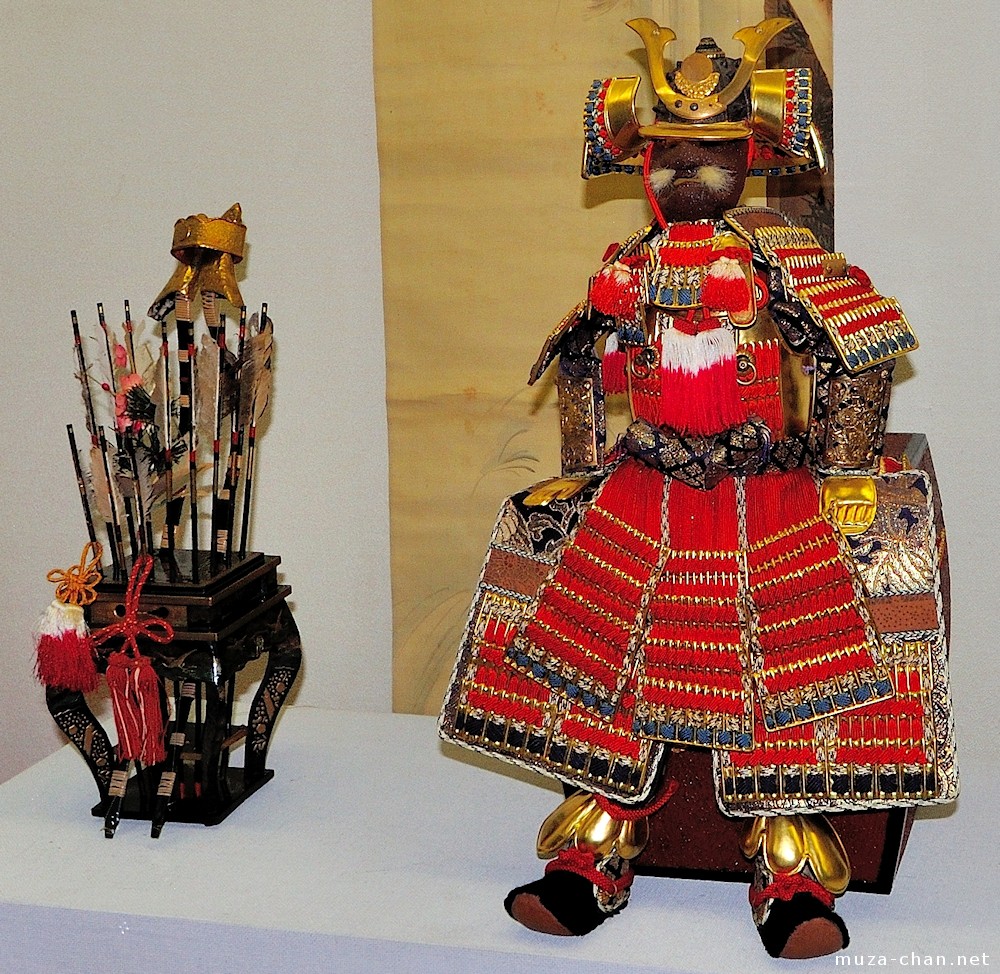
Today, on 5th May, a display is arranged in the alcove in the guest rooms of Japanese houses. The decorations are a miniature helmet, suits of armor, a sword, a bow and arrow, and silk banners bearing the family crest.
Click on photo for higher resolution:
During the Edo Period, musha ningyo (warrior dolls) were added, representing historical figures, as general Minamoto no Yoshitsune with Benkei, Toyotomi Hideyoshi, Oda Nobunaga, Momotaro, Shoki (an ancient Chinese general believed to protect people from devils) and Kintaro (hero from the Japanese folklore).
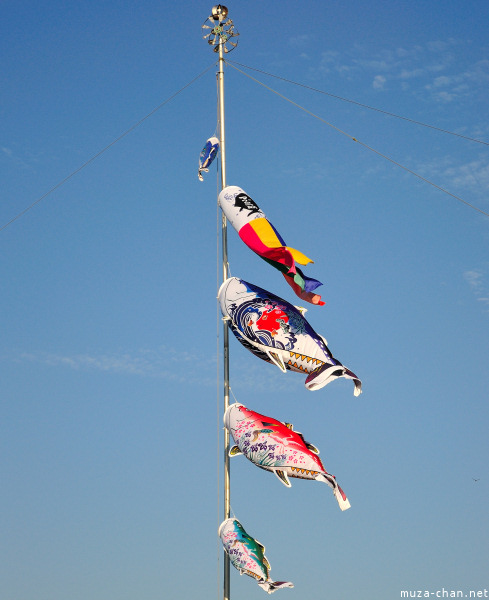
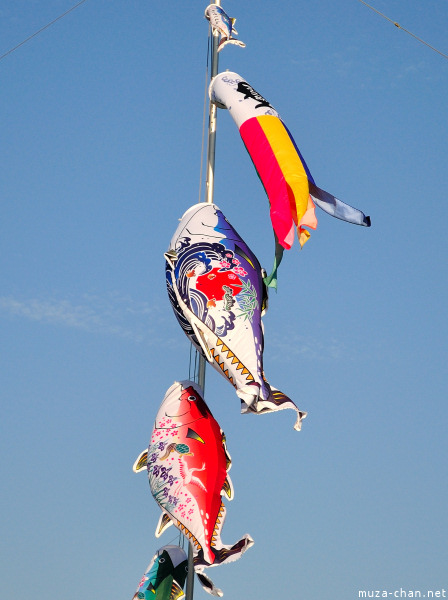
Streamers, in the form of carp (koinobori) are displayed these days in Japan, one for each boy. The biggest carp, colored in black, represents the father, the red one represents the mother, and childrens are represented by smaller carps.
Originally made of paper, these are made today from polyester or nylon.
Today, as many Japanese are living in apartment buildings, smaller koinobori are used and displayed in house.
The carp is an old symbol of perseverance and self control and it’s considered full of energy and power, because it can fight its way up the streams and cascades. Because of its strength and determination to overcome all obstacles, the carp is considered an appropriate symbol to encourage manliness and the overcoming of difficulties in life.
Two years ago, at the festival in Kazo Saitama, a huge 100 meter Koinobori was raised:
The custom is also represented in the Japanese art, for example the ukiyo-e painting of al lui Kuniyoshi Utagawa, named Banners for the boys festival.
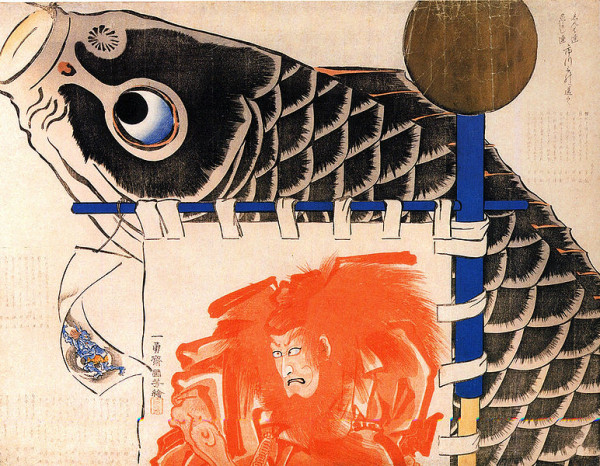 Kuniyoshi Utagawa - Banners for the boys festival, image via Wikipedia
And in conclusion, a haiku by Takahama Kyoshi, inspired from this festival:
kaze fukeba
kuru ya tonari
no koi-nobori
when the wind blows
they come this way, neighbours
carp streamers
Aşa cum fetele japoneze au sărbătoarea lor pe data de 3 martie (Hina matsuri) şi băieţii japonezi sunt sărbătoriţi pe 5 mai când are loc Tango no Sekku ( 端午の節句 ). În anul 1948 a fost declarată sărbătoare naţională, cu numele Kodomo no Hi ( ziua copiilor - こどもの日 ), căpătând un caracter mai general.
Un reportaj TV de la acest festival, filmat la Senso-ji:
Originea sărbătorii Tango no sekku nu este clară. Unii istorici spun că vine de la o veche sărbătoare din China, în care gărzile purtau coifuri ceremoniale, arcuri şi săgeţi, obicei care a devenit popular în Japonia în perioada împărătesei Suiko ( 593-628 ).
Conform unei legende, festivalul este legat de un obicei pe care îl practicau ţăranii în luna mai, perioadă în care culturile erau atacate de insecte. Ţăranii încercau să le alunge folosind steaguri cu figuri înspăimântătoare, care ulterior au început să reprezinte războinici cunoscuţi.
O altă legendă relatează că festivalul este legat de victoria împotriva mongolilor a lui Tokimune Hojo, moment în care flota mongolă a fost distrusă de un taifun, rămas în istorie cu numele de kamikaze. Cu această ocazie, familiile de samurai au ridicat steaguri pentru a celebra victoria.
Pe data de 5 mai, în camera de oaspeţi se expune un display. Iniţial, display-ul conţinea doar obiecte în miniatură purtate de samurai: un coif, o armură, o sabie, un arc cu săgeţi, steaguri din mătase cu simbolurile războinicului.
Click on photo for higher resolution:
La acestea s-au adăugat în perioada Edo păpuşile musha ningyo ( păpuşile războinic ). Păpuşile reprezintă personaje istorice considerate legendare sau din folclor, de exemplu: generalul Minamoto no Yoshitsune împreună cu Benkei,Toyotomi Hideyoshi, Oda Nobunaga, Momotaro, Kintaro ( Golden Boy, un erou din folclorul japonez ).
Cu prilejul acestei sărbători se înalţă în curte steaguri în formă de crap ( koinobori ), câte unul pentru fiecare băiat. În perioada Edo, doar cei din clasa samurailor afişau steagurile, apoi obiceiul s-a generalizat şi a fost adoptat şi de oamenii obişnuiţi.
Astăzi, datorită faptului că foarte mulţi japonezi locuiesc la bloc, se fac şi koinobori de mici dimensiuni, care se expun în casă. Iniţial koinobori se făceau din hârtie, astăzi hârtia este plastifiată sau înlocuită cu polyester sau nylon.
Crapul cel mai mare este de culoare neagră şi reprezintă capul familiei, mama este reprezentată de unul roşu, puţin mai mic decât cel al tatălui, apoi copiii de crapi din ce în ce mai mici. Crapul este un vechi simbol chinezesc al perseverenţei şi al stăpânirii de sine, iar faptul că înoată împotriva curentului simbolizează hotărâre, virtute considerată masculină.
O legendă povesteşte despre un crap care a înotat împotriva curentului şi care reuşit să urce o cascadă şi a devenit dragon. În Asia crapul simbolizează noroc şi viaţă lungă, de aceea, dacă visezi un crap, se spune că vei avea noroc. În mitologie, zeii călăresc pe crapi, care sunt şi mesageri al zeilor, în unele legende întâlnim mesaje care au fost închise în stomacul unui crap.
Cu doi ani în urmă, la festivalul din Kazo, Saitama a fost înălţat Koinobori gigantic, de 100 de metri:
Obiceiul este prezent şi în artă, spre exemplificare am ales un tablou în stil ukiyo-e al lui Kuniyoshi Utagawa intitulat Banners for the boys festival.
Kuniyoshi Utagawa - Banners for the boys festival, image via Wikipedia
Şi pentru încheiere un haiku al lui Takahama Kyoshi, inspirat de această sărbătoare:
kaze fukeba
kuru ya tonari
no koi-nobori
when the wind blows
they come this way, neighbours
carp streamers