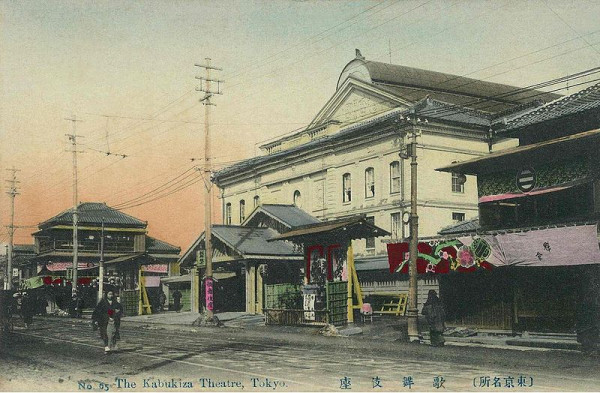
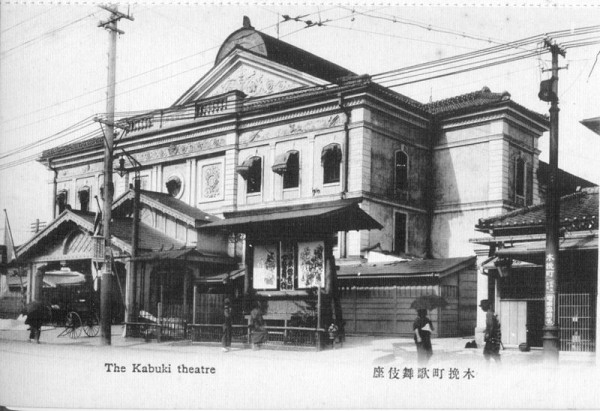
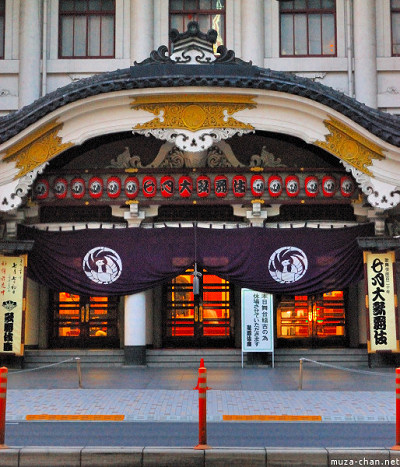
The first Kabuki-za, the main theater in Tokyo for kabuki drama, was built in Ginza in 1889 and lasted until 1921 when, being a wooden construction, was destroyed in a fire.
The reconstruction started the next year, and the new building was designed to be fireproof. However, while still unfinished, it was destroyed in 1923 by the Great Kanto Earthquake.
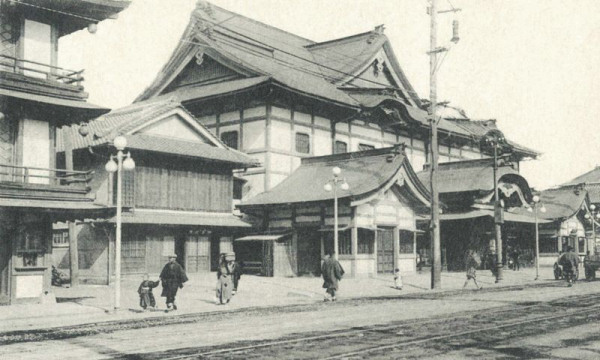 Kabuki-za between 1911 and 1921, image via Wikipedia
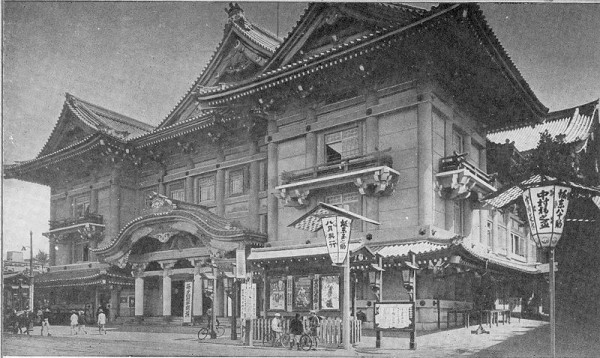
Featuring a design evoking the Japanese castles, a new theater was built in 1924. This building was also destroyed, during the WWII bombings in May 1945.
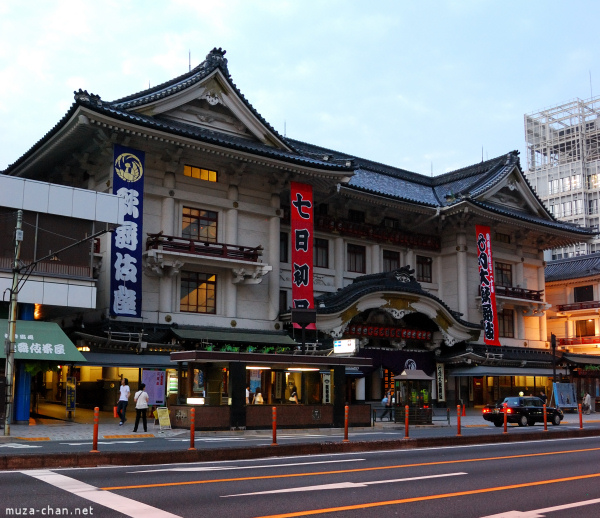
For the third time, the building was reconstructed and inaugurated in 1951, and this is the today’s Kabuki-za building… but not for long!
Tomorrow, the Kabuki-za closing ceremony will take place and the next month the building will be demolished.
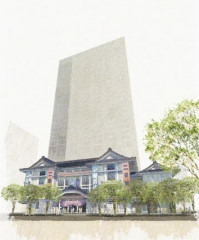
The new theater, built on the same place, will be finished in 2013 and its construction costs were evaluated last year at over 450 million dollars.
The new theater will feature similar facade ornaments, but will be a 49 stories office tower building.
Primul Kabuki-za, principalul teatru de kabuki din Tokyo, a fost construit în Ginza în 1889 şi a durat până în 1921 când, fiind o construcţie din lemn, a fost distrus de un incendiu.
Reconstrucţia a început în anul următor, iar noua clădire a fost proiectată să reziste la incendii. Clădirea, încă neterminată, a fost distrusă de marele cutremur Kanto din 1923.
Kabuki-za between 1911 and 1921, image via Wikipedia
Noul teatru, cu un design inspirat de castelele japoneze, a fost construit în 1924. Această clădire a fost distrusă în timpul bombardamentelor din mai 1945.
Clădirea reconstruită pentru a treia oară, inaugurată în 1951, este cea care există şi astăzi… dar nu pentru mult timp!
Mâine va avea loc ceremonia de închidere, iar luna viitoare Kabuki-za fi demolat.
Noul teatru, construit pe acelaşi loc, va fi gata în 2013 şi va costa peste 450 milioane de dolari.
Clădirea va avea ornamente ale faţadei similare, dar va avea forma unui turn de birouri, cu 49 de etaje.