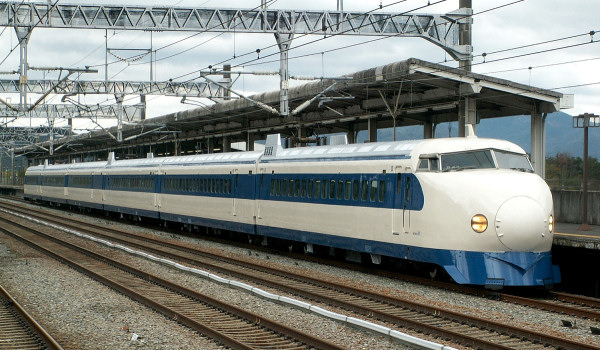
Anyone who experienced the Japanese trains has a story to tell… There are hundreds of stories about the punctuality, the speed or the cleanness of the Japanese trains. Nevertheless, what makes the Japanese trains so different? Of course, there’s no simple answer… but I’ll present you with some facts that may give an over-all picture…
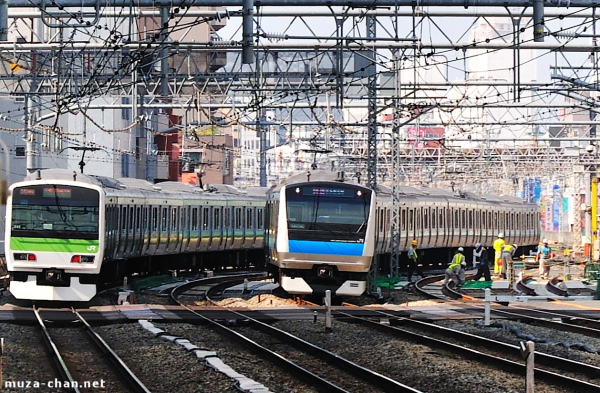 Yamanote (green) & Keihin-Tohoku (blue) commuter trains near Akihabara Station
1. The Cooperation between Japanese Train Manufacturers
Let’s start with the beginning, the factories. What can be different about them? The technology involved? Maybe, but not only…
Taking into account just the high-speed trains, while the lead manufacturers from the rest of the world are competing with each other, researching and developing their own products (e.g. Alstom with the TGV, Siemens with the ICE ), in Japan the train manufacturers have been closely cooperating ever since the first Shinkansen was produced, in 1964.
The first Shinkansen (0 Series) was produced by a group of 6 different manufacturers (Nippon Sharyo, Kawasaki Sharyo, Kinki Sharyo, Kisha, Hitachi and Tokyu Car Corporation) some of them competitors on the same market.
This cooperation led to many advantages but most significant is the fact that the Japanese trains are by far the most reliable trains in the world. In 2007, compared to the reliability of the French TGV trains, the Shinkansen trains scored 60 times better…
Oricine a avut ocazia să meargă cu trenurile japoneze are o poveste de spus… Sunt sute de relatări despre punctualitatea, viteza sau curăţenia trenurilor din Japonia. Dar totuşi, care sunt motivele pentru care trenurile japoneze sunt atât de diferite? Bineînţeles că nu se poate da un singur răspuns… dar vă voi prezenta o serie de fapte care pot da o imagine generală…
Trenuri Yamanote (verde) şi Keihin-Tohoku (albastru) lângă staţia Akihabara
1. Cooperarea dintre producătorii japonezi de trenuri
Să o luăm cu începutul, cu fabricile. Ce poate fi diferit la ele? Tehnologia? Poate, dar nu numai asta…
Vorbind numai despre trenurile de mare viteză, în timp ce producătorii de trenuri rapide din restul lumii sunt în permanentă competiţie, cercetând şi dezvoltând propriile produse (ex. Alstom cu TGV, Siemens cu ICE ), în Japonia producătorii de trenuri au cooperat strâns încă din 1964, când s-a produs primul Shinkansen.
Primul Shinkansen a fost produs de un grup format din 6 producători (Nippon Sharyo, Kawasaki Sharyo, Kinki Sharyo, Kisha, Hitachi şi Tokyu Car Corporation), unii dintre ei competitori pe aceeaşi piaţă.
Follow up:
2. The Competition between Railway Companies
Nippon Railway, the first private railway company in Japan was founded in 1881. Today there are 16 major private railways in Japan, most of them competing against the Japan Railways Group which includes 6 passenger operating companies, separated by region.
The competition between the Japanese railway companies is still fierce, there are many routes serviced by at least two operators and we can easily observe the efforts to reduce travel times.
A good example is the line between Tokyo and Narita Airport, serviced now by JR’s “Narita Express” (55 minutes to Tokyo Station) and by Keisei “Skyliner” Limited Express (60 minutes to Ueno Station).
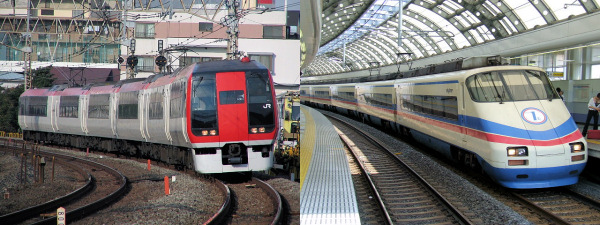 Narita Express (left) and Kaisei Skyliner (right), images via Wikipedia (N’EX and Skyliner)
Since “Narita Express” currently has a slight advantage (more expensive but better time and serves directly more major train stations), Keisei invested in the Narita Rapid Railway, which will open in July 2010 and will be 15 minutes faster than Narita Express…
Also, to attract passengers, the railway companies resorted to methods not directly related to transportation. For example, since the 1920s, some of them started to build department stores directly linked to their lines terminus stations.
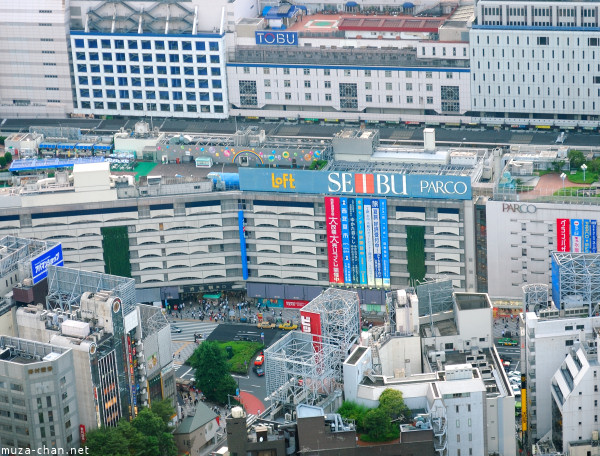 Seibu and Tobu Department Stores in Ikebukuro Station
The Department Stores founded by Tobu, Tokyu, Odakyu and Seibu are famous today, some of them with branches outside Japan.
3. The Railway Technology
Since the 1990s, the commuter Japanese trains are built with the objective of low-cost and minimal lifespan (approx. 15 years), the operators preferring to replace rather than rebuilt them when life-expired.
This policy lead to a large variety of series, with frequent improvements. You can see, for example, the variants of the 209 series, used by JR East.
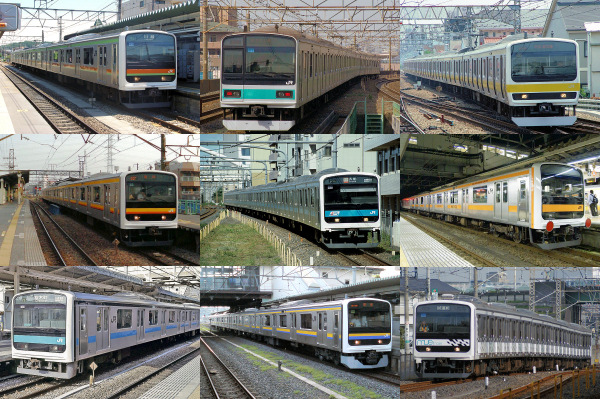 Japan Rail EMU 209 Series, images via Wikipedia
Another remarkable aspect is the effort to insure interoperability between companies even if, in many cases, there are incompatibilities between technologies and equipment, like train radio or automatic train stop systems.
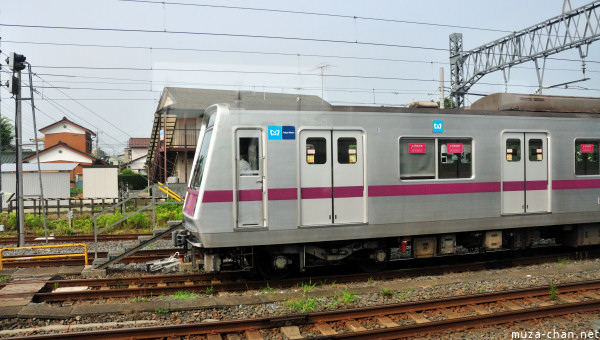 Tokyo Metro Hanzomon train operating on the Tobu Isesaki Line
But as a passenger, you can often benefit from using a train operating on metro lines, thus again reducing the travel time…
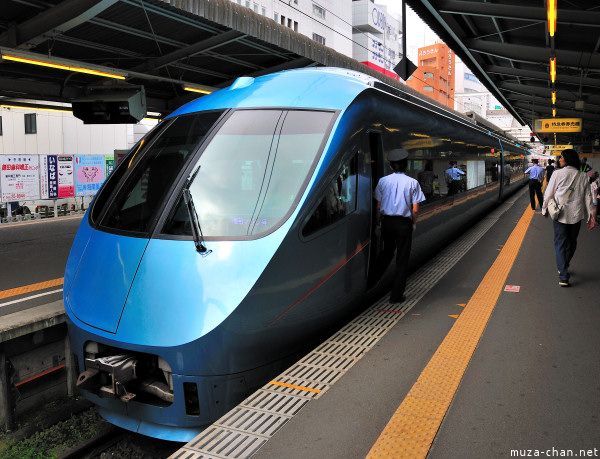 Odakyu 60000 Series MSE
For example, the Odakyu 60000 series MSE was the first limited express train with reserved seats built to operate through a subway, the Tokyo Metro Chiyoda Line.
4. The Diversity of Express Services
Most railways in the world have several variations of fast/semi-fast/slow services. However, in Japan there are impressive lists of Express services, the champion being the West Japan Railway Company, with 13 different Express services!
In the Shinjuku Station, serviced by 12 lines operated by 5 companies, we can count 15 services: Special Express, Semi Special Express, Rapid Express, Express, Tama Express, Semi Express, Section Semi Express, Commuter Special Rapid, Chūō Special Rapid, Oume Special Rapid, Special Rapid, Commuter Rapid, Rapid, Liner and Local.
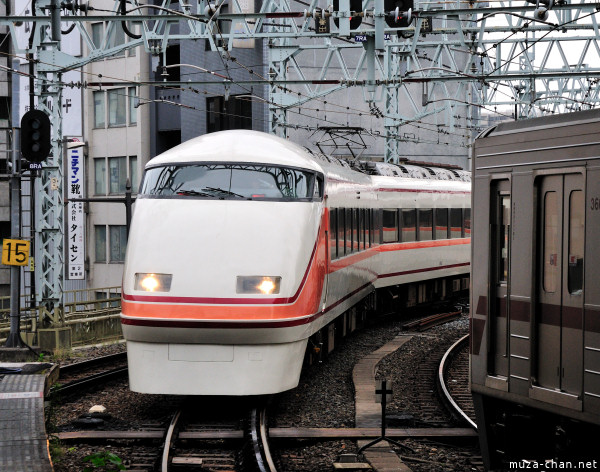 Spacia, a Limited Express of the Tobu company
This large variety is not limited to the big JR Companies, it can also be observed on the private railways. When I visited Nikko, I used the Tōbu Isesaki Line where there are no less than 8 services: Local, Section Semi-Express, Semi-Express, Section Express, Express, Rapid, Section Rapid, and Limited Express.
Even when talking about Shinkansen, there are multiple choices of services. On the Tokaido Shinkansen line there are 3 types of trains: Nozomi (the fastest, going from Tokyo to Osaka in 2 hours, 26 minutes), Hikari (approx. 3 hours), and Kodama (the slowest, approx. 4 hours).
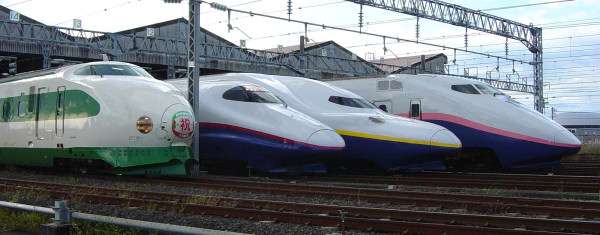 Shinkansen 200, E2, E4, E1 Series, image via Wikipedia
5. The Complex Fare Tables
With such a complex system of services, how about the tickets?
Generally, in Japan, the fare varies by distance and to this you must add several types of surcharges for express or for seats. Also, pricing can vary based on the time of the day (peak or off-peak hours)…
Buying a ticket on Japanese trains seems like a nightmare for the first time tourist, and I do have a funny story about how, in Tokyo Station, wanting to go to Kanda (just one stop away), I mistakenly bought a ticket to… the Haneda Airport! :D
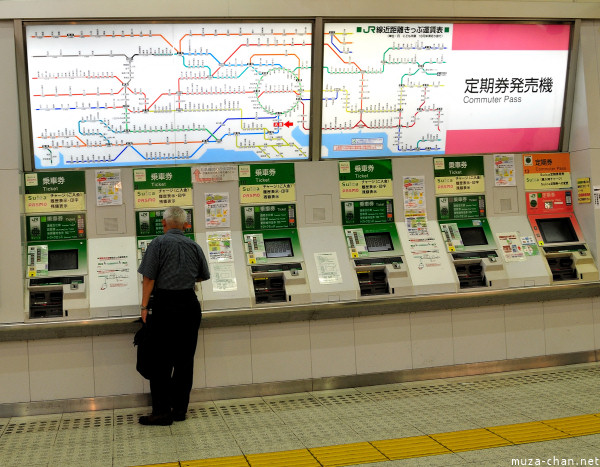 Ticket vending machines on the Omori JR Station
However, studying the complicated fare tables to buy a fare ticket is not really necessary, since generally you can start the journey with the cheapest ticket and you can pay the rest at the exit station at the Fare Adjustment machines, or you can buy a stored-value card like Suica (which I strongly recommend).
Click on photo for higher resolution:
Ticket fares in Akihabara Station: not so complex as it seems
6. The Punctuality
The punctuality of the Japanese trains is a legend since long time ago. In 2003, the average delay per train on the Tokaido Shinkansen was 6 seconds! Not impressed? Add to this the fact that during rush-hours, the Shinkansen trains are departing from Tokyo one at every 3 minutes!
And this astonishing performance is not limited to Shinkansen services. All trains, even the slower Local services follow strict timetables.
Why? The reason is that in Japan passengers are depending on this perfect punctuality to commute to and from work on time.
Most stations have been designed so that the trains meet on both sides of the same platform to allow people to transfer between Express and Local trains running on the same line.
And because of the tightness of the schedule, even a small delay of a Local train will cause a delay on the connecting Express train and will trigger a cascade of delays through the timetable.
Sometimes, this kind of synchronization works even with trains from other companies…
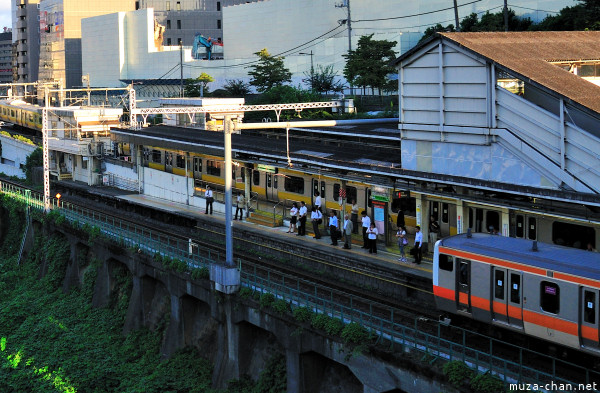 The Chuo Rapid (orange) at the same platform with the Chuo-Subu Local (yellow) at Ochanomizu Station
7. The Economics and Profitability
Over the last decades, the railways all over the world were confronted with a steady decrease in revenue, many railways are dependent of government aids and, for most of them, the goal of operational self-sufficiency is an objective that cannot be attained.
However, in Japan, even with the current economic downturn, East Japan Railway forecasts a full-year net profit of over 130 billion yen.
How is this possible? The fact is that in Japan, the relative share of railroads in total passenger traffic is still, by far, the largest in the developed countries.
On the other hand, considering all these performances, it’s no surprise that people prefer trains…
Of course not everything is well and good. There are also negative aspects, like the well known groping crimes that determined railway companies to introduce women-only cars.
There is also criticism to the too strictly enforced punctuality, which is blamed as a cause for the terrible rail crash from Amagasaki (in 2005) which killed 106 and injured 555 passengers.
The subject of Japanese trains is vast and fascinating not only for the railway enthusiasts, and for good reason, is a subject of national pride for the Japanese people.
2. Competiţia între companiile feroviare
Nippon Railway, prima companie privată de căi ferate din Japonia, a fost fondată în 1881. Astăzi sunt 16 mari companii private, multe dintre ele concurând cu Japan Railways Group, care include 6 companii de transport persoane, separate pe regiuni.
Competiţia dintre companiile feroviare din Japonia este încă dură, multe rute fiind operate de cel puţin două companii şi se pot observa uşor eforturile de reducere a timpului de călătorie.
Un exemplu elocvent este linia dintre Tokyo şi aeroportul Narita, pe care operează atât “Narita Express” al JR East (55 minute până la staţia Tokyo) cât şi “Skyliner” Limited Express al companiei Keisei (60 minutes de la staţia Ueno).
Narita Express (stânga) şi Kaisei Skyliner (dreapta), imagini via Wikipedia (N’EX şi Skyliner)
Deoarece “Narita Express” are un mic avantaj (deşi este mai scumpă, are un timp mult mai bun şi are şi avantajul de a trece direct prin staţii importante), Keisei a investit în linia Narita Rapid Railway, care se va deschide în iulie 2010 şi care va fi mai rapidă cu 15 minute decât Narita Express…
Pentru a atrage pasagerii, companiile feroviare au folosit şi alte metode decât cele legate direct de transporturi, de exemplu încă din 1920, multe companii au început să construiască magazine legate direct cu staţiile terminale de tren.
Seibu şi Tobu Department Stores în staţia Ikebukuro
Magazinele Tobu, Tokyu, Odakyu şi Seibu sunt astăzi foarte cunoscute, unele dintre ele chiar şi în afara Japoniei.
3. Tehnologia materialului rulant
Încă din 1990, trenurile de personal japoneze au fost construite având ca obiective preţ-scăzut şi durata de viaţă minimă (circa 15 ani), preferându-se înlocuirea completă în locul modernizării.
Aceasta a dus la o mare varietate a seriilor, cu îmbunătăţiri frecvente. Puteţi vedea ca exemplu diferitele variante pentru seria 209, utilizată de JR East.
Japan Rail EMU Seria 209, imagini via Wikipedia
Un alt aspect remarcabil este efortul de a asigura interoperabilitatea între companii, chiar dacă în multe din cazuri există incompatibilităţi între tehnologiile şi echipamentul utilizat, cum ar fi comunicaţiile radio sau sistemele de oprire automată.
Metrou al liniei Tokyo Metro Hanzomon operând pe linia Tobu Isesaki
Dar, ca pasager, poţi beneficia mult călătorind cu un tren care poate utiliza o linie de metrou, reducând din nou timpul călătoriei…
Odakyu 60000 Series MSE
De exemplu, trenul Odakyu seria 60000 MSE este fost primul tren “Limited Expres” cu locuri rezervate care poate rula pe o linie de metrou, pe linia Tokyo Metro Chiyoda.
4. Gamă diversă de Servicii Express
Majoritatea căilor ferate din lume au servicii care variază în funcţie de viteză, linii rapide/semi-rapide/lente (rapid/accelerat/personal). În Japonia există o listă impresionantă de servicii expres, campionul fiind West Japan Railway Company, cu un număr de 13 astfel de servicii!
În staţia Shinjuku , care are 12 linii operate de 5 companii, putem număra 15 tipuri de servicii: Special Express, Semi Special Express, Rapid Express, Express, Tama Express, Semi Express, Section Semi Express, Commuter Special Rapid, Chūō Special Rapid, Oume Special Rapid, Special Rapid, Commuter Rapid, Rapid, Liner şi Local.
Spacia, un tren Limited Express al companiei Tobu
Această varietate nu este limitată la marile companii JR, ci există şi la companiile private. Când am vizitat Nikko am folosit linia Tōbu Isesaki care oferă nu mai puţin de 8 tipuri de servicii: Local, Section Semi-Express, Semi-Express, Section Express, Express, Rapid, Section Rapid şi Limited Express.
Chiar şi atunci când ne referim la Shinkansen, sunt mai multe tipuri de servicii. Linia Tokaido Shinkansen are 3 tipuri de trenuri: Nozomi (cel mai rapid, mergând de la Tokyo la Osaka în 2 ore şi 26 minute), Hikari (approx. 3 hours) şi Kodama (cel mai lent, approx. 4 hours).
Shinkansen seriile 200, E2, E4, E1, imagine via Wikipedia
5. Tabele complicate de preţuri
Cu un sistem de servicii atât de complex, cum se procedează cu biletele?
În general, în Japonia, preţul biletului variază în funcţie de distanţă, la care se adaugă diferite tipuri de tarife suplimentare pentru liniile rapide sau pentru locuri rezervate. Pe de altă parte, preţul poate varia în funcţie de oră (ore de vârf sau nu)…
Pentru un turist ajuns pentru prima dată în Japonia, cumpărarea unui bilet pare un coşmar. Îmi amintesc cum în staţia Tokyo, dorind să ajung în Kanda (care este doar la o staţie distanţă ), am cumpărat din greşeală un bilet pentru… aeroportul Haneda! :D
Automate de vânzare bilete
De fapt, nu este neapărat necesar să studiezi tabelele complicate de preţuri, poţi cumpăra la intrare cel mai ieftin bilet şi apoi poţi plăti restul la ieşirea din staţie sau poţi cumpăra un card ca Suica (ceea ce vă şi recomand).
Click on photo for higher resolution:
Preţurile biletelor în staţia Akihabara: nu atât de complicat pe cât ar părea
6. Punctualitatea
Punctualitatea trenurilor japoneze este legendară. În 2003, media întârzierilor pe linia Tokaido Shinkansen a fost de 6 secunde! Nu sunteţi impresionaţi? Adăugaţi şi faptul că la orele de vârf, trenurile Shinkansen pleacă din Tokyo câte unul la 3 minute!
Dar aceste performanţe uluitoare nu sunt limitate doar la liniile Shinkansen. Toate trenurile, chiar şi cele locale, cele mai lente, urmează un program extrem de strict.
De ce? Motivul este că în Japonia pasagerii sunt dependenţi de această punctualitate pentru a putea face legături cu alte trenuri şi a ajunge la serviciu la timp.
Multe staţii au fost construite în aşa fel încât trenurile de legătură să folosească acelaşi peron, pentru a asigura transferul pasagerilor între linia Express şi cea locală.
Şi pentru că planificarea este atât de strictă, o mică întârziere a unui tren local va cauza o întârziere a Expresului de legătură şi va declanşa o cascadă de întârzieri.
Uneori, această sincronizare se face şi cu trenurile altor companii…
Rapidul Chuo (portocaliu) pe acelaşi peron cu trenul local Chuo-Subu (yellow) la staţia Ochanomizu
7. Profitabilitatea
În ultimii zeci de ani, liniile ferate din toată lumea au fost confruntate cu o continuă scădere a veniturilor şi multe companii sunt dependente de ajutoare guvernamentale.
Însă în Japonia, chiar şi în actuala perioada de criză economică, East Japan Railway prognozează un profit net anual de 130 miliarde de yeni.
Bineînţeles, nu totul este bun şi frumos. Există şi o serie de aspecte negative, ca binecunoscutele crime sexuale care au determinat companiile feroviare să asigure vagoane doar pentru femei.
Există şi critici referitoare la stricteţea exagerată în ce priveşte punctualitatea, aceasta fiind considerată cauza teribilului accident din Amagasaki (în 2005), în care au murit 106 pasageri, iar 555 au fost răniţi.
Cum este posibil? Adevărul este că în Japonia procentul căilor ferate din traficul total de pasageri este, de departe, cel mai mare din rândul ţărilor dezvoltate.
Pe de altă parte, considerând toate performanţele, nu este o surpriză că oamenii preferă trenurile…