Customs and traditions of Japan - Seijin no hi
By Muza-chan on Jan 11, 2010 | In History | 22 feedbacks »
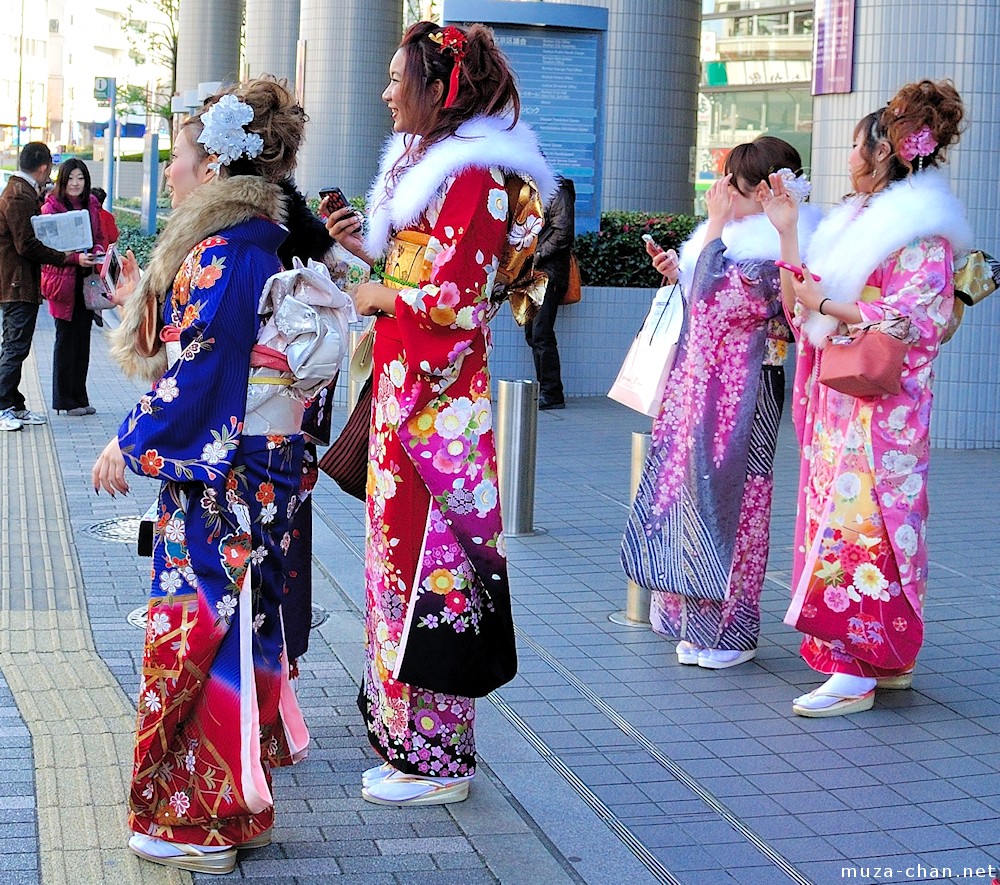
Seijin no hi ( 成人の日 - Coming of Age Day) is a national holiday in Japan since 1948, when it was established on the January 15th. Since 2000, when the Happy Monday System was established, Seijin no hi takes place on the second Monday of January.
This day is a celebration for all the young adults who reached the age of 20 during the current school year (between last year’s April and the current year’s March).
The age of 20 is the age when the Japanese become officially adults, so they can vote, etc.

photo credit: Jean-François Chénier
In the old times, there was in Japan a ceremony called genpuku, when the boys with ages between 12 and 17 were celebrated, receiving for the first time adult clothes and changing the haircut.
The same ceremony for girls was called mogi and was celebrating the girls between 12 and 14 years.
During the post-war crisis, on November 22 1946 in Warabi, Saitama Prefecture, a young leader called Shoujirou Takahashi organized a Youth Festival, in order to boost the morale of the young generations. The event spread throughout Japan, and in 1948 was declared a national holiday.
Today on Seijin no hi, the young adults wear for the first time adult clothing. The women are dressed in a traditional furisode, a brightly colored silk kimono with long sleeves, but few men are still wearing traditional clothes, many of them preferring the modern suit.
A full set of traditional dressing for women can be very expensive (around 10000$), so not many girls can afford a new set. There’s a custom to wear for this occasion clothes inherited from the family or rented. An interesting fact, the renting is also quite expensive, costing from several hundred to 1000 dollars!
On this occasion, a ceremony is also held at Shinto Shrines, a ritual that few foreigners have had the opportunity to see.
Here’s a recording with Aya Ueto’s Seijin no hi ceremony.
In conclusion, let’s watch two nice recordings from this holiday and a set of the best Creative Commons pictures from Flick:
Feedbacks:
RT @Muzachan: Customs and traditions of Japan - Seijin no hi [link]
RT @Muzachan Customs and traditions of Japan - Seijin no hi [link]
RT @Muzachan: Customs and traditions of Japan - Seijin no hi [link]
I didn't know the origin, though I live near Warabi. RT @Muzachan: Customs and traditions of Japan - Seijin no hi [link]
RT: @Muzachan: Customs and traditions of Japan - Seijin no hi [link]
This post was mentioned on Twitter by Muzachan: Customs and traditions of Japan - Seijin no hi http://bit.ly/51tPcS
RT @Muzachan: Customs and traditions of Japan - Seijin no hi [link]
Customs and traditions of Japan - Seijin no hi: Seijin no hi ( 成人の日 - Coming of A.. [link]
RT @Muzachan: Customs and traditions of Japan - Seijin no hi [link]
Customs and traditions of Japan - Seijin no hi [link] (via @Muzachan)
RT @Muzachan: Customs and traditions of Japan - Seijin no hi [link]
I wasn't the unique to write a post on Seijin no Hi today, pls check @Muzachan [link] and @alafista [link] too!
昨日は成人の日。外国の人にも興味深い? RT @Muzachan Customs and traditions of Japan - Seijin no hi [link]
Domo Arrigato
Aloha, Friend
RT @Muzachan: Customs and traditions of Japan - Seijin no hi [link]


12 Sakura Manhole Covers
A Japan Photo per Day - A City That Doesn't Sleep
The Sad Story of the Hidden Ginkgo from Tsurugaoka Hachimangu
A Japan Photo per Day - A City That Doesn't Sleep